What is AltPoint™ Ultrasound-Guided Galvanic Electrolysis (USGET)

AltPoint delivers a low-intensity galvanic electrical current directly to dysfunctional tissue using ultrasound guidance, triggering controlled inflammation, clearing degeneration, and stimulating true cellular repair.
"Chronic pain doesn’t happen “for no reason.” Those reasons are why I created AltPoint."
- Dr. Sean Altman
In most cases chronic pain stems from damaged, degenerated, or poorly healed connective tissue — ligaments, tendons, fascia, or joint capsules that never fully recovered after an injury, stress, or other trauma.
AltPoint™ Percutaneous Needle Electrolysis (PNE)—also known as Ultrasound-Guided Galvanic Electrolysis Therapy (USGET)—is a breakthrough treatment developed by Dr. Sean Altman to help the body restart the healing process where it stalled.
How AltPoint™ Works?
Rather than masking symptoms, AltPoint is designed to repair the underlying tissue, restore stability, and help patients return to an active, more confident, lifestyle.
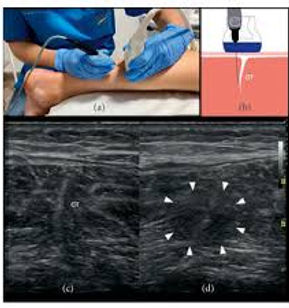
AltPoint™ is a clinician-designed, ultra-precise regenerative needling device that delivers a gentle electrical current through a fine needle directly into injured tissue—guided by real-time ultrasound for accuracy and safety.
Unlike injections or surgery, AltPoint:
-
Does not inject medications, steroids, PRP, or cells
-
Uses the body’s own biology to stimulate repair
-
Is minimally invasive with very little downtime
-
Can be used for both acute and long-standing injuries
When tissue has been injured for weeks, months, years, healing can become “stuck.”
AltPoint helps unstick the process through several powerful mechanisms:
🔹 1. Precision Targeting
Using ultrasound, Dr. Altman places the needle exactly into the damaged ligament, tendon, or scar tissue—not just the painful area.
🔹 2. Restarting Healing
The gentle electrical current resets chronic inflammation, signaling the
body that repair is needed again.
🔹 3. Stronger Tissue Formation
AltPoint stimulates fibroblasts, the cells responsible for producing collagen,
helping rebuild tissue that is stronger, more organized, and more resilient.
🔹 4. Improved Blood Flow & Cellular Energy
The treatment improves micro-circulation and local cellular activity,
supplying oxygen and nutrients where healing is needed most.
🔹 5. Neurological “Reset”
AltPoint helps calm irritated nerves and restores proper communication
between muscles, joints, and the brain—improving control, stability,
and confidence in movement.
Conditions Treated with AltPoint™
AltPoint has been successfully used to treat a wide range of musculoskeletal and ligament-based conditions, including:
-
Chronic tendon injuries (Achilles, rotator cuff, elbow, knee)
-
Ligament laxity and instability
-
Labral tears (hip and shoulder)
-
Meniscus tears
-
Plantar fasciitis
-
SI joint dysfunction
-
Post-surgical scar tissue and adhesions
-
Craniocervical Instability (CCI)
Healing timelines typically range from 4–8 weeks, often with only two treatments, depending on the condition.
Real-World Results: AltPoint Case Outcomes
Across 50 documented patient cases, AltPoint has demonstrated:
-
Pain reduction from 8–10/10 → 0–1/10
-
Strength improvements of 40–65%
-
Healing confirmed by musculoskeletal ultrasound
-
Return to sport, work, and daily activities
-
Resolution of injuries previously told they “would not heal”
Selected Examples:
-
Achilles tear: Fully healed by 8 weeks; returned to running
-
Hip labral tear: Pain resolved in 6 weeks
-
Shoulder labrum: Avoided surgery and returned to swimming
-
Meniscus tear: Full knee function restored
-
Chronic elbow tendinopathy: Grip strength fully restored
Why Dr. Altman’s Approach Is Different
AltPoint is not a standalone treatment—it is part of The Altman Method, a systems-based approach that integrates:
-
Precision diagnostics
-
Ultrasound-guided interventions
-
Neuromuscular re-education
-
Proprioceptive retraining
-
Long-term tissue resilience strategies
This is why outcomes are not just fast—but durable.
AltPoint For Craniocervical Instability (CCI)
A Final Word
AltPoint™ exists because too many people were told:
-
“You’ll have to live with it.”
-
“It won’t heal.”
-
“Surgery is your only option.”
For many patients, these statements are simply not true. If you are dealing with chronic pain, instability, or an injury that never fully healed, AltPoint may offer a safe, effective, and regenerative path forward. Book an Evaluation to see if you qualify for a non-surgical recovery powered by The Altman Method.




PNE/USGET Key Studies
1. Abat F, Diesel WJ, Gelber PE, Polidori F, Monllau JC, Sanchez-Ibanez JM. Effectiveness of the intratissue percutaneous electrolysis (EPI)
technique and isoinertial eccentric exercise in patellar tendinopathy at two years follow-up. Muscles Ligaments Tendons J. 2014;4(2):188-
193. PubMed: https://pubmed.ncbi.nlm.nih.gov/25332934/
2. Abat F, Gelber PE, Polidori F, Monllau JC, Sanchez-Ibanez JM. Clinical results after ultrasound-guided intratissue percutaneous electrolysis
(EPI) and eccentric exercise in the treatment of patellar tendinopathy. Knee Surg Sports Traumatol Arthrosc. 2015;23(4):1046-1052.
PubMed: https://pubmed.ncbi.nlm.nih.gov/24477495/
3. Arias-Buría JL, Truyols-Domínguez S, Valero-Alcaide R, Salom-Moreno J, Atín-Arratibel MA, Fernández-de-Las-Peñas C. Ultrasound-guided
percutaneous electrolysis and eccentric exercises for subacromial pain syndrome: a randomized clinical trial. Evid Based Complement
Alternat Med. 2015;2015:315219. PubMed: https://pubmed.ncbi.nlm.nih.gov/26649058/
4. Arias-Buría JL, Truyols-Domínguez S, Valero-Alcaide R, et al. Ultrasound-guided percutaneous electrolysis as an adjunct to exercise and
manual therapy for subacromial pain syndrome: a randomized clinical trial. J Pain. 2018;19(10):1107-1116.
PubMed: https://pubmed.ncbi.nlm.nih.gov/29729339/
5. Asensio-Olea L, Leirós-Rodríguez R, Marqués-Sánchez MP, Oliveira de Carvalho F, Maciel LYS. Efficacy of percutaneous electrolysis for the
treatment of tendinopathies: a systematic review and meta-analysis. Clin Rehabil. 2023;37(6):747-759.
PubMed: https://pubmed.ncbi.nlm.nih.gov/36583575/
6. Augustyn D, Paez A. The effectiveness of intratissue percutaneous electrolysis (EPI) for the treatment of tendinopathy: a systematic
review. S Afr J Sports Med. 2022;34(1):1-5. PubMed:
https://pubmed.ncbi.nlm.nih.gov/?term=Augustyn+Paez+EPI+tendinopathy+systematic+review
7. Borrella-Andrés S, Malo-Urriés M, Pérez-Bellmunt A, et al. Application of percutaneous needle electrolysis does not elicit temperature
changes: an in vitro cadaveric study. Int J Environ Res Public Health. 2022;19(23):15738. PubMed:
https://pubmed.ncbi.nlm.nih.gov/36497812/
8. Calderón-Díez L, Sánchez-Sánchez JL, Robles-García M, et al. Cadaveric and ultrasound validation of a percutaneous electrolysis approach
at the Achilles tendon: a pilot study. Int J Environ Res Public Health. 2022;19(19):11906. PubMed:
https://pubmed.ncbi.nlm.nih.gov/36231206/
9. De-la-Cruz-Torres B, Barrera-García-Martín I, Valera-Garrido F, et al. Ultrasound-guided percutaneous electrolysis in dancers with chronic
soleus injury: a randomized clinical trial. Evid Based Complement Alternat Med. 2020;2020:4156258.
PubMed: https://pubmed.ncbi.nlm.nih.gov/33329681/
10. De-la-Cruz-Torres B, Romero-Rodríguez B, Romero-Morales C. Ultrasound-guided percutaneous needle electrolysis combined with
therapeutic exercise may add benefit in the management of soleus injury in female soccer players: a pilot study. J Sport Rehabil.
2022;32(3):265-271. PubMed: https://pubmed.ncbi.nlm.nih.gov/36410342/
11. Doménech-García V, Pecos-Martín D, Blasco-Abadía J, et al. Placebo and nocebo effects of percutaneous needle electrolysis and dry
needling: a three-arm randomized double-blinded trial in patellar tendinopathy. Front Med (Lausanne). 2024;11:1381515.
PubMed: https://pubmed.ncbi.nlm.nih.gov/38611444/
12. Fakontis C, Iakovidis P, Lytras D, et al. Efficacy of percutaneous needle electrolysis versus dry needling in musculoskeletal pain: a
systematic review and meta-analysis. J Back Musculoskelet Rehabil. 2023;36(4):715-726. PubMed:
https://pubmed.ncbi.nlm.nih.gov/36919855/
13. Fernández-Rodríguez T, Fernández-Rolle A, Truyols-Domínguez S, et al. Prospective randomized trial of electrolysis for chronic plantar
heel pain. Foot Ankle Int. 2018;39(9):1039-1046. PubMed: https://pubmed.ncbi.nlm.nih.gov/29792000/
14. García Naranjo J, Barroso Rosa S, Loro Ferrer J, et al. A novel approach in the treatment of acute whiplash syndrome: ultrasound-guided
needle percutaneous electrolysis. Orthop Traumatol Surg Res. 2017;103(8):1229-1234. PubMed: https://pubmed.ncbi.nlm.nih.gov/28987529/
15. García-Vidal JA, Salinas J, Escolar-Reina P, et al. Galvanic current dosage and bacterial concentration are determinants of the bactericidal
effect of percutaneous electrolysis: an in vitro study. Sci Rep. 2021;11:18977. PubMed: https://pubmed.ncbi.nlm.nih.gov/34545017/
16. García-Vidal JA, Salinas J, Ortega N, et al. In vitro bacteriological effect of tri-beveled needle electrolysis against Staphylococcus aureus. Sci Rep. 2022;12:11468. PubMed: https://pubmed.ncbi.nlm.nih.gov/35835568/
17. Gómez-Chiguano GF, Navarro-Santana MJ, Cleland JA, et al. Effectiveness of ultrasound-guided percutaneous electrolysis for
musculoskeletal pain: a systematic review and meta-analysis. Pain Med. 2021;22(5):1055-1071. PubMed: https://pubmed.ncbi.nlm.nih.gov/33155055/
18. Gonzalez-Perez LM, Vera-Martin R, Montes-Latorre E, et al. Botulinum toxin and percutaneous electrolysis for chronic masticatory
myalgia. Toxins (Basel). 2023;15(4):278. PubMed: https://pubmed.ncbi.nlm.nih.gov/37109040/
19. Hissa ML, Araújo GA, De-La-Cruz-Torres B. Effectiveness of percutaneous needle electrolysis to reduce pain in tendinopathies: a
systematic review and meta-analysis. J Sport Rehabil. 2024;33(5):307-316.
PubMed: https://pubmed.ncbi.nlm.nih.gov/?term=Hissa+percutaneous+needle+electrolysis+tendinopathies
20. Iborra-Marcos Á, Ramos-Álvarez JJ, Rodríguez-Fabián G, et al. Intratissue percutaneous electrolysis versus
corticosteroid infiltration for plantar fasciosis. Foot Ankle Int. 2018;39(6):704-711. PubMed: https://pubmed.ncbi.nlm.nih.gov/29584581/
21. Jiménez-Rubio S, Oliva-Pascual-Vaca J, Rodríguez-Blanco C, et al. Ultrasound-guided percutaneous electrolysis and rehabilitation following hamstring injury reduces return-to-play time in professional soccer: a case series. J Invasive Tech Phys Ther. 2020;3(1):38-45.
PubMed: https://pubmed.ncbi.nlm.nih.gov/?term=hamstring+injury+percutaneous+electrolysis+case+series
22. López-Martos R, González-Pérez LM, Ruiz-Canela-Méndez P, et al. Percutaneous electrolysis versus dry needling in temporomandibular
myofascial pain: a double-blind randomized clinical trial. Med Oral Patol Oral Cir Bucal. 2018;23(4):e454-e462.
PubMed: https://pubmed.ncbi.nlm.nih.gov/29966921/
23. López-Royo MP, Ríos-Díaz J, Galán-Díaz RM, et al. Comparative study of interventions for patellar tendinopathy: a randomized trial. Arch
Phys Med Rehabil. 2021;102(5):967-975. PubMed: https://pubmed.ncbi.nlm.nih.gov/33421651/
24. Martínez-Silván D, Santomé-Martínez F, Champón-Chekroun A, et al. Clinical use of percutaneous needle electrolysis in musculoskeletal
injuries: a systematic review. Apunts Sports Med. 2022;57:100396. PubMed: https://pubmed.ncbi.nlm.nih.gov/36110071/
25. Ramos-Barbero M, Pérez-Jiménez A, Serrano-Carmona S, et al. Percutaneous electrolysis and nutritional factors in induced tendinopathy: an animal study. Int J Mol Sci. 2024;25(13):7315. PubMed: https://pubmed.ncbi.nlm.nih.gov/?term=Int+J+Mol+Sci+2024+7315+percutaneous+electrolysis
26. Rodríguez-Huguet M, Góngora-Rodríguez J, Martín-Valero R, et al. Effectiveness of percutaneous needle electrolysis in supraspinatus
tendinopathy: a randomized clinical trial. J Clin Med. 2020;9(6):1837. PubMed: https://pubmed.ncbi.nlm.nih.gov/32545583/
27. Rodríguez-Huguet M, Góngora-Rodríguez J, Lomas-Vega R, et al. Percutaneous needle electrolysis in chronic lateral epicondylalgia: a
randomized clinical trial. J Clin Med. 2020;9(7):2068. PubMed: https://pubmed.ncbi.nlm.nih.gov/32711442/
28. Rodríguez-Sanz J, Rodríguez-Rodríguez S, López-de-Celis C, et al. Biological and cellular effects of percutaneous electrolysis: a systematic
review. Biomedicines. 2024;12(12):2818. PubMed: https://pubmed.ncbi.nlm.nih.gov/?erm=Biomedicines+2024+2818+percutaneous+electrolysis
29. Sánchez-González JL, Navarro-López V, Cañada-Sánchez P, et al. Efficacy of different intensities of percutaneous electrolysis for
musculoskeletal pain: a systematic review and meta-analysis. Front Med (Lausanne). 2023;10:1178466. PubMed: https://pubmed.ncbi.nlm.nih.gov/37484648/
30. Sánchez-González JL, Navarro-López V, Calderón-Díez L, et al. Effectiveness of different percutaneous electrolysis protocols in endogenous pain modulation: a randomized controlled trial. Musculoskelet Sci Pract. 2023;68:102872. PubMed: https://pubmed.ncbi.nlm.nih.gov/37673344/
31. Tavares-da-Silva AC, Barroso-Barrosen F, Moreira-Marcos A, Silva-Lima A. Effect of percutaneous electrolysis on pain and disability in
tendinopathy: a systematic review and meta-analysis. J Bodyw Mov Ther. 2024;40:134-144. PubMed: https://pubmed.ncbi.nlm.nih.gov/39593657/
32. Valera-Calero J, Sánchez-Mayoral-Martín A, Varol U. Short-term effectiveness of high- and low-intensity percutaneous electrolysis in
patellofemoral pain syndrome: a pilot study. World J Orthop. 2021;12(10):781-790. PubMed: https://pubmed.ncbi.nlm.nih.gov/34782855/
33. Valera-Garrido F, Minaya-Muñoz F, Medina-Mirapeix F. Ultrasound-guided percutaneous needle electrolysis in chronic lateral
epicondylitis: short-term and long-term results. Acupunct Med. 2014;32(6):446-454. PubMed: https://pubmed.ncbi.nlm.nih.gov/25122629/
34. Valera-Garrido F, Margalef R, Bosque M, et al. Percutaneous needle electrolysis accelerates functional muscle regeneration in mice. Appl
Sci. 2022;12(19):10014. PubMed: https://pubmed.ncbi.nlm.nih.gov/?term=Appl+Sci+2022+10014+percutaneous+needle+electrolysis
35. Varela-Rodríguez S, Sánchez-González JL, Sánchez-Sánchez JL, et al. Effects of percutaneous electrolysis on endogenous pain modulation: study protocol. Brain Sci. 2021;11(6):801. PubMed: https://pubmed.ncbi.nlm.nih.gov/34207083/
36. Varela-Rodríguez S, Sánchez-Sánchez JL, Velasco E, et al. Endogenous pain modulation in response to a single session of percutaneous
electrolysis in healthy individuals: a randomized clinical trial. J Clin Med. 2022;11(10):2889. PubMed: https://pubmed.ncbi.nlm.nih.gov/35772021/
37. De la Cruz Torres B, Albornoz Cabello M, García Bermejo P, Naranjo Orellana J. Autonomic responses to ultrasound-guided percutaneous
needle electrolysis of the patellar tendon in healthy male footballers. Acupunct Med. 2016;34(4):275-279. PubMed: https://pubmed.ncbi.nlm.nih.gov/26792776/
38. García Bermejo P, De la Cruz Torres B, Naranjo Orellana J, Albornoz Cabello M. Autonomic responses to ultrasound-guided percutaneous
needle electrolysis: effect of needle puncture or electrical current? J Altern Complement Med. 2018;24(1):69-75. PubMed: https://pubmed.ncbi.nlm.nih.gov/28135129/
39. Muñoz-Fernández AC, Barragán-Carballar C, Villafañe JH, et al. A new ultrasound-guided percutaneous electrolysis and exercise treatment in patellar tendinopathy: three case reports. Front Biosci (Landmark Ed). 2022;27(3):109. PubMed: https://pubmed.ncbi.nlm.nih.gov/34856761/
40. Gómez-Chiguano GF, Navarro-Santana MJ, Cleland JA, et al. Effectiveness of ultrasound-guided percutaneous electrolysis
for musculoskeletal pain: a systematic review and meta-analysis. Pain Med. 2021;22(5):1055-1071.
PubMed: https://pubmed.ncbi.nlm.nih.gov/33155055/
Book Your Evaluation and discover how advanced, targeted therapies can unlock your body’s ability to heal—without unnecessary surgery or endless “management” plans.